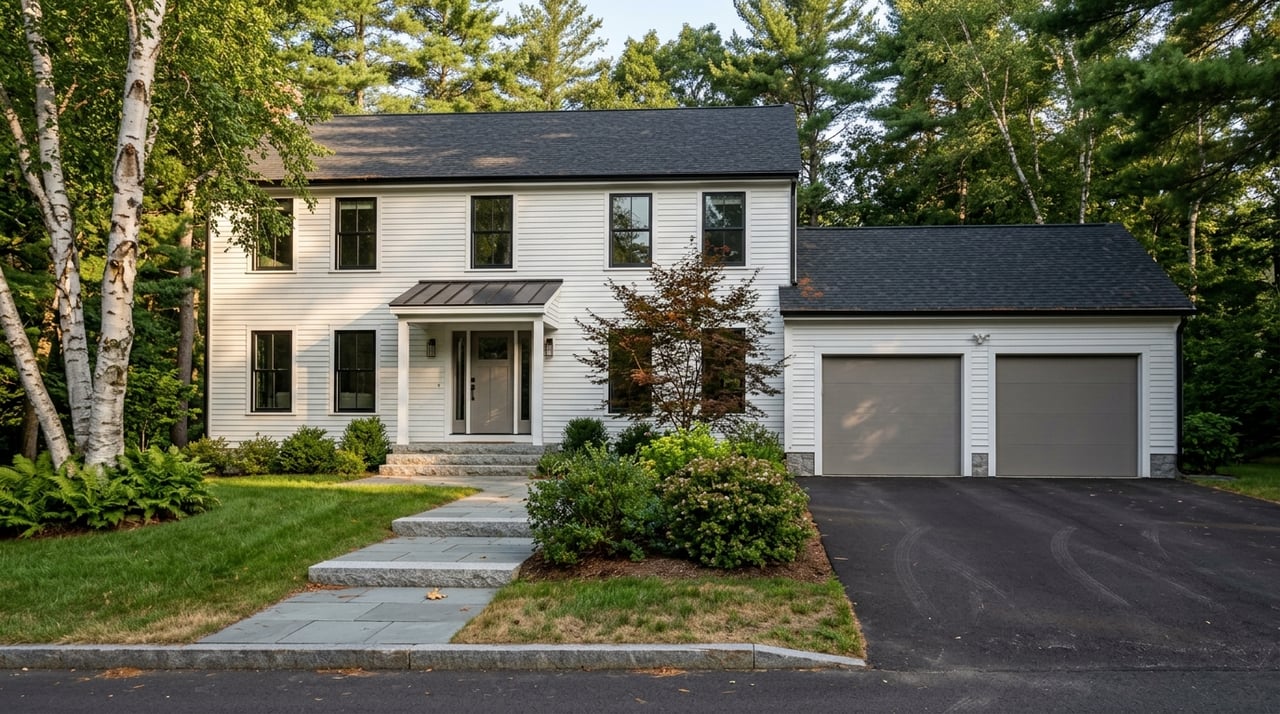
If your workday starts in Manchester, Concord, or somewhere along I-93, where you live can shape everything from your morning stress level to how much home you can buy. Hooksett often comes up for buyers who want a practical commute, a more residential setting, and housing options that sit between city living and higher-priced suburban markets. This guide will help you understand what commuter living in Hooksett really looks like, what types of homes you’re likely to find, and how to think about value before you make a move. Let’s dive in.
Why Hooksett works for commuters
Hooksett sits just north of Manchester and about 11 miles south of Concord, which gives it a strong position for buyers commuting within southern and central New Hampshire. The town’s road network is built around I-93, with Routes 3, 3A, 28, 28A, and the Route 28 Bypass also supporting local travel. If you want direct regional access without being in a denser urban setting, that location is a big part of Hooksett’s appeal.
For a baseline, the Census reports a mean travel time to work of 26.9 minutes in Hooksett. That does not mean every trip will take that long, but it gives you a reasonable starting point for expectations. Your actual commute will depend on your destination, your schedule, and how traffic is moving on I-93.
What daily life feels like
Hooksett offers convenience, but it is not built around a dense downtown core. Town planning materials point to active commercial corridors along Hooksett Road, Quality Drive, Londonderry Turnpike, and Hackett Hill Road, with major retail and service uses in those areas. In real life, that means many errands, shopping trips, and daily stops can be handled close to home.
At the same time, Hooksett is still largely car-oriented. If you are hoping for a highly walkable, transit-first lifestyle, this may not be the right fit. If you prefer easy road access and the ability to get around by car without giving up a more residential feel, Hooksett may check the right boxes.
Common home types in Hooksett
For many buyers, the biggest question is simple: what can you actually buy here? Hooksett’s housing stock leans heavily toward detached homes. Southern New Hampshire Planning Commission data shows that 61% of the town’s housing units are single-family detached homes.
That matters if you want more privacy, yard space, or a traditional suburban layout. Compared with more urban markets, Hooksett may offer a housing mix that feels more spacious and less condensed. It can be a practical option if you are trying to balance commute access with everyday livability.
There is also a smaller but meaningful multifamily segment. The same data shows 15% of housing units are multifamily buildings with five or more units. That gives buyers some range, especially if you are open to lower-maintenance living or want to compare detached homes with other property types.
How competitive is the market?
Hooksett is not a market where inventory feels endless. A regional housing snapshot noted that only 1% of units were for sale or rent at that time, which points to limited availability. For buyers, that means being prepared matters.
Recent pricing and pace also show a fairly active market. Redfin reported a median sale price of $419,749 in the three months ending May 2026, with homes selling in a median of 6 days. That kind of speed can make decision-making feel intense, especially if you are also trying to line up a commute-friendly location.
What homes cost in Hooksett
Price is one of Hooksett’s strongest talking points for commuter buyers. Census QuickFacts lists a median owner-occupied home value of $407,000, while the regional housing table places Hooksett’s median value at $370,300. Those figures come from different sources and should be treated as a range, not a contradiction.
The practical takeaway is that Hooksett tends to land in a middle zone for many owner-occupied homes, often in the mid-$300,000s to low-$400,000s. That middle-ground pricing is part of why the town gets attention from buyers who want to stay connected to key job centers without stretching into some of the higher-priced nearby markets.
How Hooksett compares to nearby towns
Commuter buyers rarely look at just one town. They usually compare several places at once and ask where they can get the best balance of price, space, and convenience. Hooksett stands out because it often sits in the middle of that conversation.
Regional data shows Hooksett’s median home value below Bedford at $582,000 and Londonderry at $464,100. It comes in above Manchester at $336,300 and close to Goffstown at $350,700, Derry at $381,700, and Candia at $391,600. That positions Hooksett as a tradeoff town: often more house and more of a residential feel than Manchester, while usually carrying less price pressure than Bedford or Londonderry.
Is Hooksett a good fit for your budget goals?
If you are trying to buy strategically, Hooksett can make sense for more than just the drive to work. A market in the mid-range of nearby towns may give you options to prioritize square footage, layout, or long-term usability without automatically targeting the highest price point in the area. That can matter whether you are buying your first home, moving up, or thinking about future resale.
Hooksett also has a high owner-occupied rate at 80.6%, which supports the idea that many buyers choose the town for longer-term living rather than short-term convenience alone. When a town attracts a large share of owner-occupants, that can be meaningful for buyers who want stability in their planning and a place that feels rooted in residential use.
What to know about commuting options
Most Hooksett residents will still rely on their cars, but there is some public transit support. The Manchester Transit Authority operates the Hooksett Shuttle, which provides curb-to-curb service for Hooksett residents on weekdays from 9:00 a.m. to 2:00 p.m. Riders may travel within Hooksett, Manchester, or Bedford depending on availability, and trips to Concord may be limited by schedule.
The shuttle connects to MTA Route 11 at Walmart in Hooksett. MTA also shows commuter and intercity service to Concord, Nashua, and Salem on its route pages. That said, transit here should be seen as limited support rather than a full replacement for driving.
Tradeoffs to weigh before buying
Every commuter town asks you to make a few tradeoffs, and Hooksett is no different. The upside is strong highway access, practical shopping and service areas, and a housing mix led by detached homes. For many buyers, that creates a useful blend of convenience and breathing room.
The tradeoff is that Hooksett is not designed around a dense town center or broad all-day transit service. Some newer housing has also been built in more remote parts of town, according to planning materials, which can affect how close you feel to major routes and everyday errands. That makes location within Hooksett almost as important as choosing the town itself.
How to shop smart in Hooksett
If Hooksett is on your shortlist, it helps to narrow your search with your commute in mind from the beginning. Two homes at similar price points can offer very different daily routines depending on access to I-93, nearby commercial corridors, and your regular destination. Looking beyond the house itself can save you time and stress after closing.
A smart search often starts with a few simple priorities:
- Your typical work destination and ideal drive time
- Your need for single-family space versus lower-maintenance living
- Your comfort level with a car-dependent daily routine
- Your price range compared with nearby towns you are also considering
- Your long-term goals for equity, usability, and resale
Why Hooksett appeals to practical buyers
Some buyers are not looking for the trendiest market. They are looking for a place that works. Hooksett appeals to that mindset because it offers a useful location, a largely detached-home housing stock, and pricing that often lands between more expensive suburbs and more urban alternatives.
If you think about real estate as both a home and a long-term financial decision, that middle-ground position can be worth a closer look. You may be able to find a property that supports your daily routine now while also giving you room to think strategically about value over time.
If you want help comparing Hooksett with nearby commuter towns or evaluating which properties best match your budget and long-term goals, connect with The BRP Group | Brad Roberts.
FAQs
What is the average commute time for homebuyers in Hooksett, NH?
- Hooksett’s mean travel time to work is 26.9 minutes, though your actual commute will vary based on destination, route, and I-93 traffic.
What types of homes are most common in Hooksett, NH?
- Detached single-family homes are the most common, making up 61% of the housing stock, with a smaller but meaningful share of multifamily housing also available.
How do Hooksett home prices compare with nearby towns?
- Hooksett is generally priced below Bedford and Londonderry, above Manchester, and near towns like Goffstown, Derry, and Candia.
Is Hooksett, NH good for commuters who use public transit?
- Hooksett has limited transit support through the weekday Hooksett Shuttle and MTA connections, but most residents still rely on driving for daily commuting.
Why do buyers consider Hooksett, NH for commuter living?
- Buyers often look at Hooksett for its I-93 access, residential housing mix, convenient retail corridors, and middle-ground pricing compared with nearby southern New Hampshire towns.