If you're pricing a Laconia property for Airbnb or VRBO income, here's the question that matters more than the asking price: which zone is it in?
That question got a lot sharper on March 9, 2026, when the Laconia City Council voted 6-0 to pass an ordinance amendment that redraws which parts of the city can legally operate a non-owner-occupied short-term rental. A three-bedroom house two streets apart from another three-bedroom house can now have completely different legal ceilings on rental income, and the difference has nothing to do with square footage, lake frontage, or condition. It comes down to a zoning line drawn on a map at Laconia City Hall.
If you're running numbers on a potential rental property here, that line needs to be the first thing you check, not the last.
What Actually Changed
Before this spring, a property owner in Laconia's Residential Single-Family (RS) zone who wanted to run a non-owner-occupied short-term rental could apply for a special exception through the Zoning Board of Adjustment. It wasn't easy, but it was a defined path.
The amendment approved in March closed that path. RS-zoned properties, which Planning Director Rob Mora told the planning board make up roughly 20 percent of the city, are no longer eligible for a special exception for short-term lodging. Owners in that zone who aren't already permitted now have to seek a zoning variance instead, a standard that Assistant Planning Director Tyler Carmichael and multiple councilors described as a materially higher bar to clear.
At the same meeting, the council also raised the maximum length of a single short-term booking from 14 consecutive nights to 28. Carmichael explained the mechanics plainly during the public hearing: rent a unit for 27 days or fewer and it's still short-term lodging under the ordinance. Push past that and it falls outside the rule. For an investor, that's not a footnote. It opens room for longer stays, think traveling healthcare workers, contract crews, or seasonal remote employees, without losing the short-term lodging classification that comes with an easier permit structure than a full residential tenancy.
The ordinance also tightened reporting. Permit holders will now need to submit rental data and proof of a rooms and meals tax license to the city, which gives Laconia far better visibility into who's actually operating than the informal system that existed before.
Why the City Drew the Line Where It Did
The vote didn't happen in a vacuum. Planning board member Mike Conant said during the March 3 planning board meeting that he helped push the changes after a specific situation: a home in a residential neighborhood bought solely to run as short-term lodging. Mora made the underlying concern explicit at an earlier meeting, describing a scenario the city has already seen play out.
"We've also seen in the city a multi-family structure, or a three-unit multi-family structure, the owner lives there and they are short-term lodging out the other two units. Those units are now lost to those people who are desperately in need of them, which was the whole purpose we created the short-term lodging ordinance, to preserve the housing stock in the heart of Laconia where the working people live."
That's the policy logic in one paragraph: every unit converted to nightly turnover is a unit that isn't available to a year-round renter. The city's original short-term lodging ordinance traces back to 2019, prompted by complaints from residents on Old North Main Street about a rental generating repeated noise complaints over a single summer. The current fight over the RS zone is the same tension seven years later, just with sharper teeth.
Not everyone on the council agreed with where the line landed. Conant voted for the broader package but opposed the RS carve-out specifically, arguing at the March 3 meeting that the change put an unfair burden on one-fifth of the city's population by taking away a path that owner-occupants in other zones still have. Mayor Mike Bordes went further, opposing the change outright and framing it as a property rights issue tied to the city's tourism economy.
"When government begins to dictate how often a homeowner can use their own property, who can stay there, or what qualifies as an acceptable use, we cross the line from reasonable regulation to overreach."
Ward 5 Councilor Steven Bogert offered the counterpoint from the other side of the city, pointing out that Laconia has residents whose jobs have nothing to do with tourism and who live in the same single-family neighborhoods now under debate. The ordinance passed anyway, 6-0, which tells you where the council as a body landed even with real disagreement in the room.
Three Zones, Three Different Deals
None of this means short-term rental income is off the table in Laconia. It means the deal looks completely different depending on where the property sits.
| Zone | What's allowed for non-owner-occupied STR | The catch |
|---|---|---|
| Residential Single-Family (RS) | Not eligible for special exception as of March 2026 | Requires a zoning variance, a higher legal standard, unless the owner occupies the property at least 150 days a year |
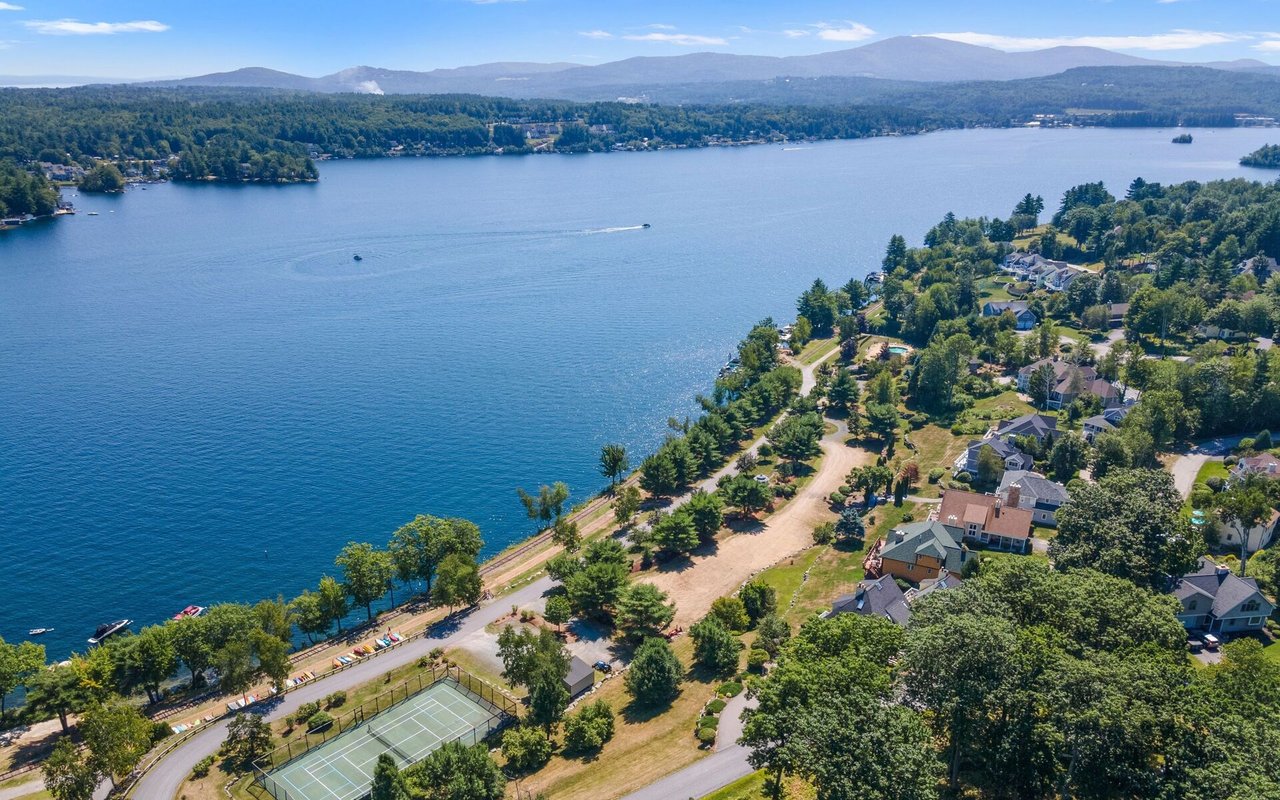
| Shorefront Residential (SFR) | Special exception still available | This is the district built around Lake Winnipesaukee and Weirs Beach, so demand and price both run higher |
| Commercial Resort (CR), concentrated at The Weirs | The most permissive zone in the city | Already home to the bulk of the city's approved rentals, including clusters with multiple units on one parcel |
As of the city's own count in March 2025, Laconia had 93 approved short-term rentals, mostly concentrated at The Weirs, with additional clusters downtown, around Lake Opechee, and on both sides of Paugus Bay. That distribution isn't an accident. It's the zoning map made visible.
There's also a grandfather clause worth knowing about if you're looking at an older listing. A property that was already operating as a short-term rental before December 2014 can potentially still qualify for a special exception even outside the newly restricted areas, so a home's rental history can matter as much as its zoning designation.
What to Check Before You Run the Numbers
If a listing description mentions Airbnb potential or investment upside, treat that as a starting point, not a fact. Before you build a pro forma around nightly rate and occupancy, get answers to these:
- What zone is the property actually in, RS, SFR, CR, or something else, and has that changed recently
- If it's in the RS zone, does it already hold an active short-term lodging permit, or would you be starting from a variance application
- Would you meet the 150-day owner-occupancy threshold, or are you buying purely as an investor
- Does the property have rental history that predates December 2014
- Does your business model depend on quick weekend turnover, or would longer 15-to-28-day stays work, since that changes which zones and which guest profiles make sense
None of this is a substitute for confirming details directly with the Laconia Planning Department before you write an offer. Zoning lines, permit status, and ordinance language are the kind of facts that need to be verified property by property, not assumed from a neighboring listing.
A Few Questions Worth Answering Directly
Does this ordinance apply to duplexes and small multifamily buildings, or just single-family homes? The zoning district, not the building type, is what triggers the rule. A two or three-unit building sitting in the RS zone runs into the same restriction as a single-family home in that zone. Mora's own example to the planning board was a multi-unit property where the owner lived in one unit and short-term rented the others, which is precisely the pattern the amendment targets.
If a property is already operating as a short-term rental, does the new ordinance affect it? Existing permitted rentals aren't automatically shut down by this change. The amendment governs new applications going forward, which is exactly why a property's current permit status and history matter as much as its zone when you're evaluating a purchase.
Are neighboring Lakes Region towns less restrictive? Regulations vary town to town and change on their own timelines, so a rule that applies in one community won't necessarily apply next door. That variation is one more reason to confirm current zoning and permit rules for the specific municipality and parcel you're considering rather than assuming consistency across the region.
Zoning maps don't show up on the portal listing photos, and they rarely make it into the property description. But they're doing more to determine what a Laconia rental property can actually earn than almost any other line item on the spec sheet. If you're comparing properties across zones, or trying to figure out whether a specific parcel would even qualify for the income model you have in mind, The BRP Group can help you check the zoning reality before you get attached to the numbers on paper. Let's Connect.